Saturday, 4 May 2013

EXP 2: COMBINED AXONOMETRIC IN S/UP AND INCOMPLETE TERRAIN

After this week's studio session, I decided to use a different axonometric combination (I have since updated my electroliquid aggregation to suit the axonometric pair which I am now using). Under the advisement of my tutor I began experimenting with CryEngine textures and terrains to create a unique environment which differed from the typical forest/river/waterfall approach that most students were taking (including myself). I eventually settled on a middle-eastern inspired landscape - one of Ro's suggestions. We also discussed the way in which the top of my monument was the widest part, and could be used as a structural support wedged between a very vertical terrain with the rest of the monuments suspended beneath this. Using this idea, I created an Afghanistan-inspired 'valley', where a relatively low and flat desert surface was surrounded by mountains. Here is a photograph which partially inspired the design:


I am happy with my terrain modelling in the CryEngine file in regards to the mountains and the overall appearance, however due to limitations in my knowledge of entities such as rocks, grass, and trees, it was difficult to add such aspects to the design. I feel that most of the entities available in the SDK are intended (or at least work much much better) in a green and lush forest landscape, rather than a pale desert landscape. As such, certain smaller aspects of the landscape detail are not yet fully complete, however due to the middle-eastern terrain being naturally limited in foliage this should not be too much of an issue. Here is a screenshot from the lower and flatter part of the valley, viewing the mountains where the monument will be 'wedged'.
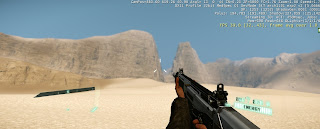
                                      

Following this idea of the flat top of the monument, I decided to use this space as the meeting place, with each monument hanging from below one side of the meeting space. This allowed the meeting place to be the access point to each monument, thus providing the space with more purpose and making it integral as both a structural and functional piece of the monuments. Here is a screenshot of my incomplete S/up model. I still have to add stairs and a few small details such as handrails to allow the space to be more usable, but I am happy with the progress thus far.


Monday, 29 April 2013

EXP 2: COMBINED AXONOMETRICS


EXP 2: CHOSEN AXONOMETRIC AND ELECTROLIQUID AGGREGATION

Here is my chosen axonometric combination with which to develop into my CryEngine landscape. It is a combination of the concepts: 'Raumplan – multi-level articulation of rooms through cubes' and 'spatial fluidity is established through plan and in a vertical hierarchy.'


I feel that these two concepts work well together but are also great descriptions of each architect's work. My electroliquid aggregation is: Rationality and fluidity in architecture is achieved through an articulation of space through multiple levels and a vertical hierarchy - ultimately establishing a layering effect.

Monday, 22 April 2013

EXP 2: INITIAL AXONOMETRICS AND SKETCHUP MODEL IN CRYENGINE


Below is the sketchup model which I based from one of my pairs of axonometric drawings.


I was unable to use Fraps to capture my images from CryEngine due to the requirement of administrator privileges to use the program - which proved an issue as my final work was completed in the Red Centre labs. However, here is three screenshots of my model integrated into a landscape made in the CryEngine editor.